

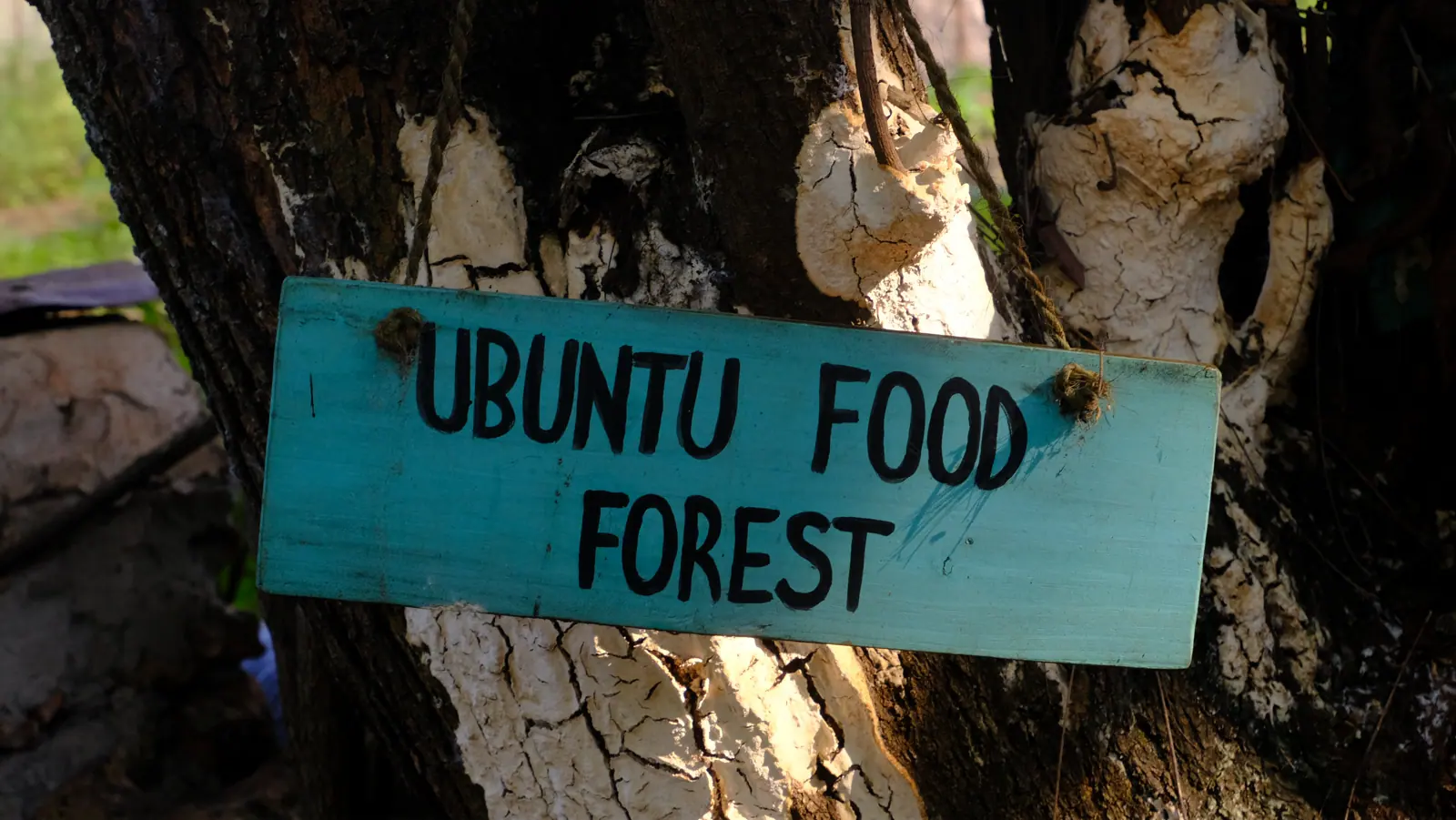
05 · Living PEACE Village
Food Forest
Living systems
A layered growing system connecting soil restoration, biodiversity, school learning, food and heritage-based enterprise.
What this experience reveals
From an idea to a lived experience.
The Food Forest shows regenerative living as everyday practice. Assalam's published record places it within wider permaculture work, while the chronology connects it to Regreening Zanzibar and its work with schools and communities.
- Layered food-growing systems
- Soil restoration
- Locally useful plant diversity
- Learning through cultivation
Published record
Each figure keeps its own scope so programme totals, site facts and future ambitions are not confused.
- 500+
- Farmers trained
- Regenerative agriculture and climate resilience · since 2017
- 1,500+
- Households benefiting
- Climate-resilient food systems · organization-provided figure
- 20+
- School permaculture gardens
- Across Assalam's work · since 2017
- 10,000+
- Trees planted across Assalam's work
- Chronology total, 2017-June 2026; not Food Forest-only
Evidence noteThe farmer, household and garden figures are organization-provided totals. The 10,000+ tree figure covers Assalam's wider work through June 2026 and is not a Food Forest-only count.
Inside this experience
Knowledge made visible.
Three ways this part of the village connects inherited knowledge, practical learning and community life.
Narrative supplied by Assalam in July 2026 and checked against the 2025 annual report and chronology through June 2026.
01
School gardens as green engines
Regeneration begins in the classroom.
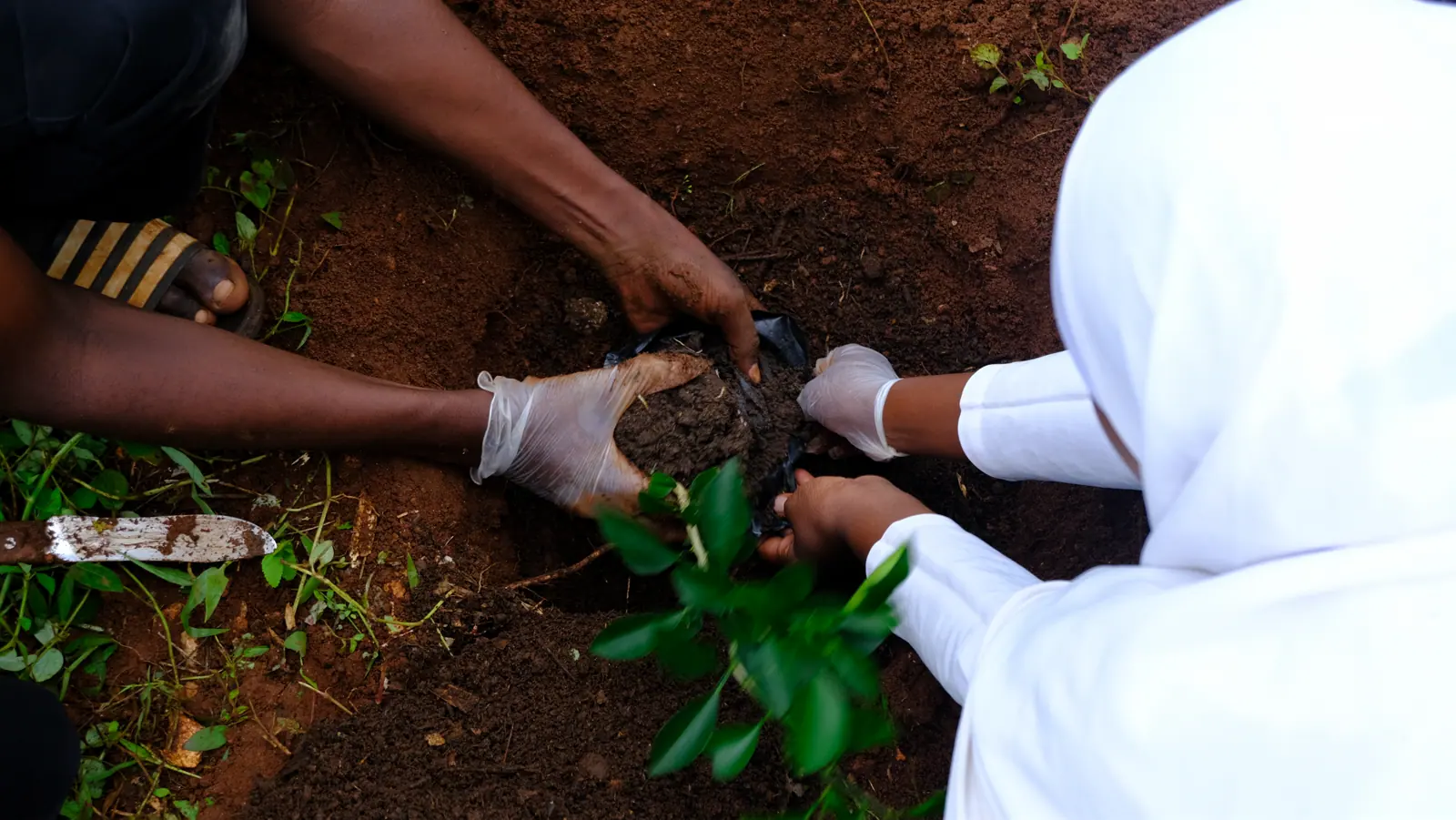
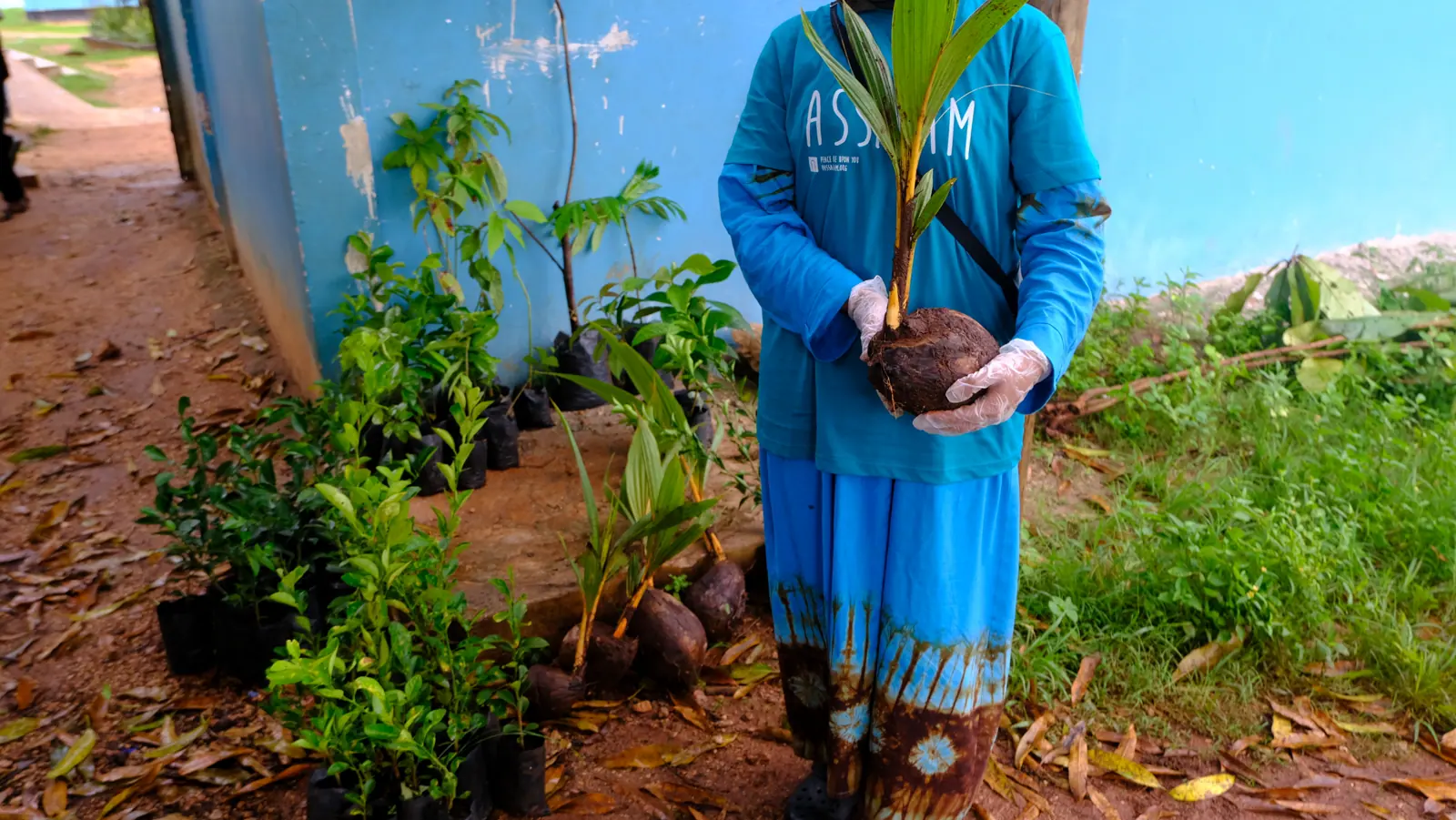
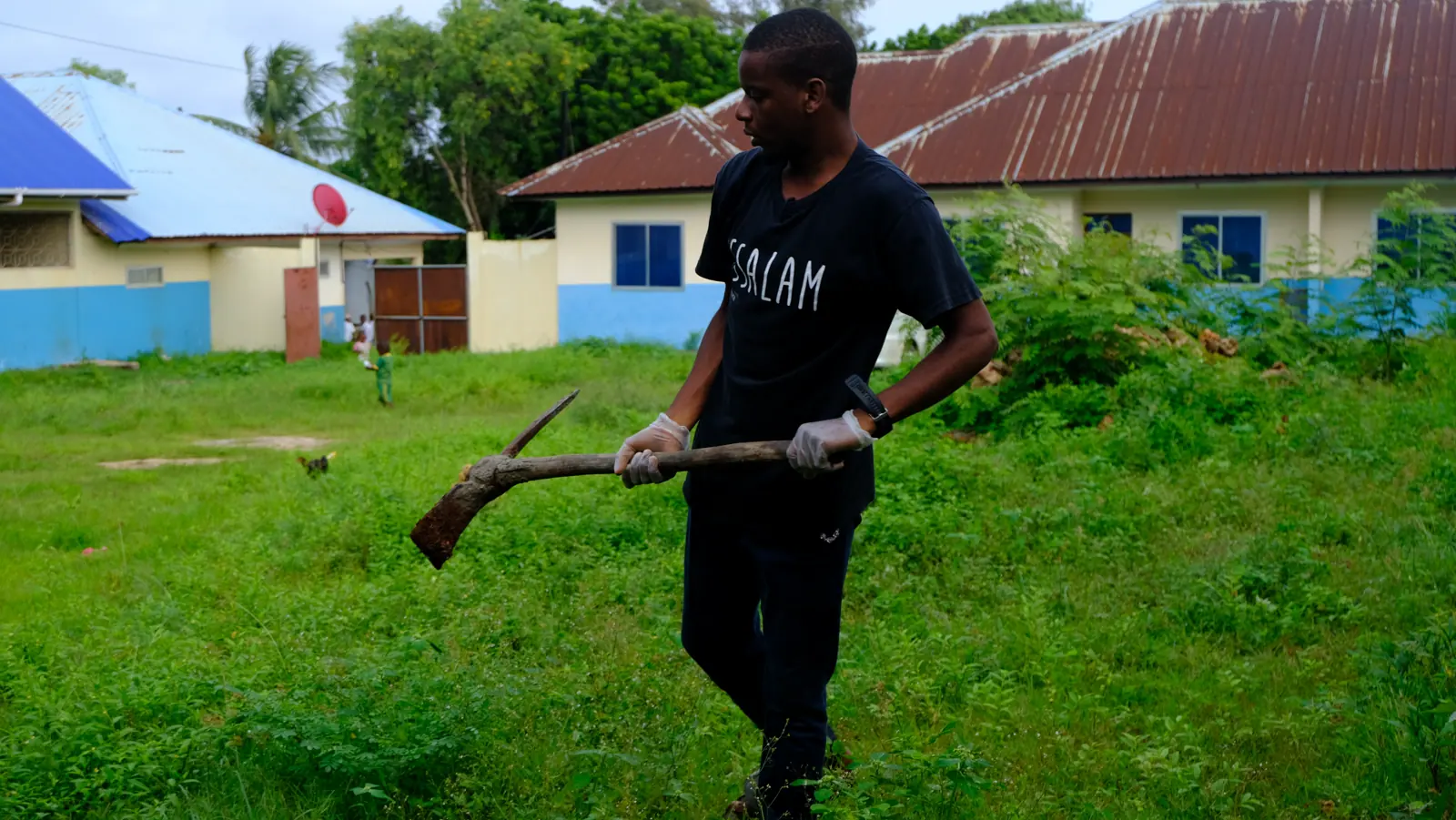
Assalam works with schools so children and teachers participate directly in planting, composting and caring for useful trees. A school garden becomes both a growing space and a long-term relationship with the land.
The approach connects environmental education to repeated practice: learners observe what survives, what improves the soil and what can contribute food, shade or spice over time.
02
Hands-on hope
Learning through the soil.
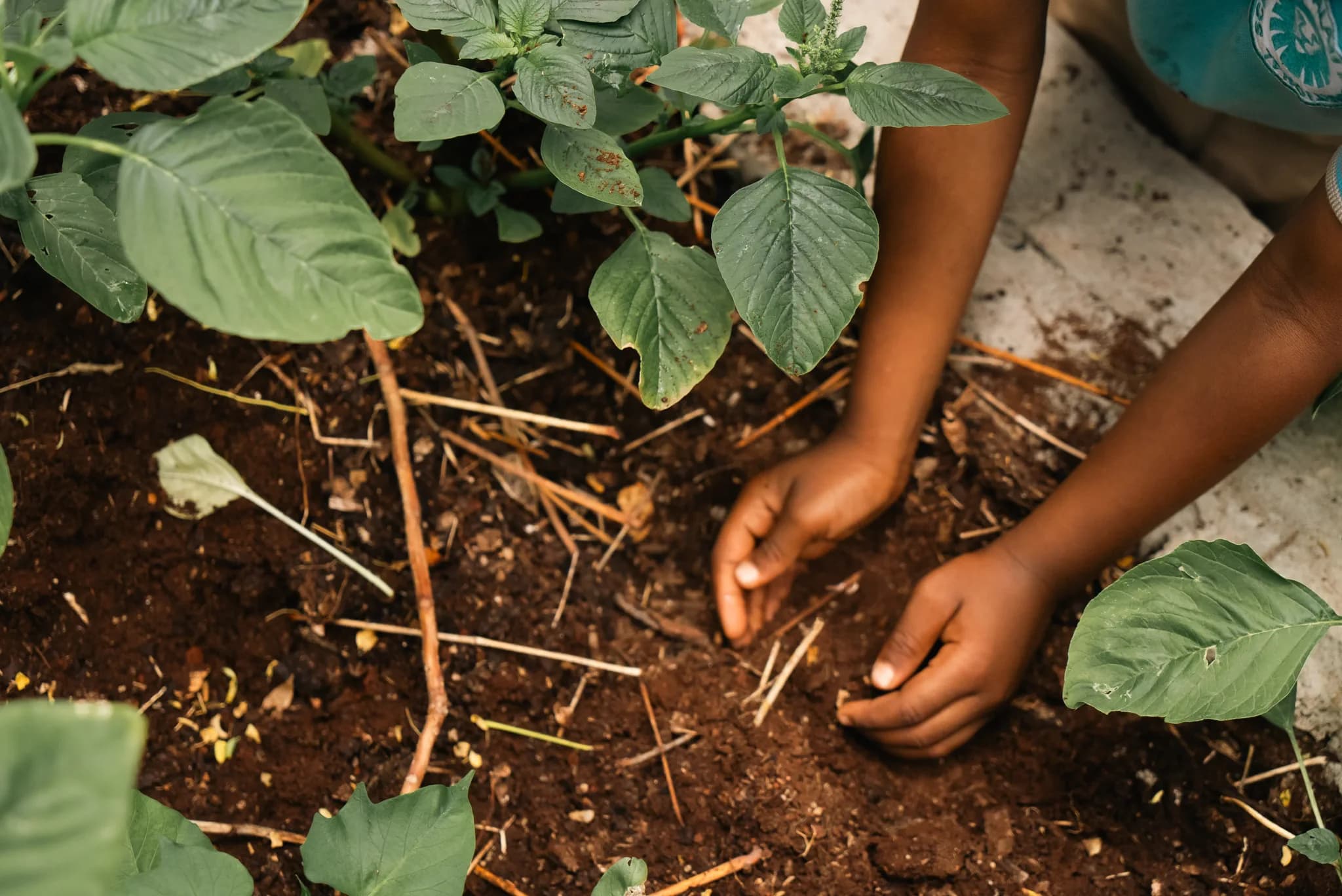
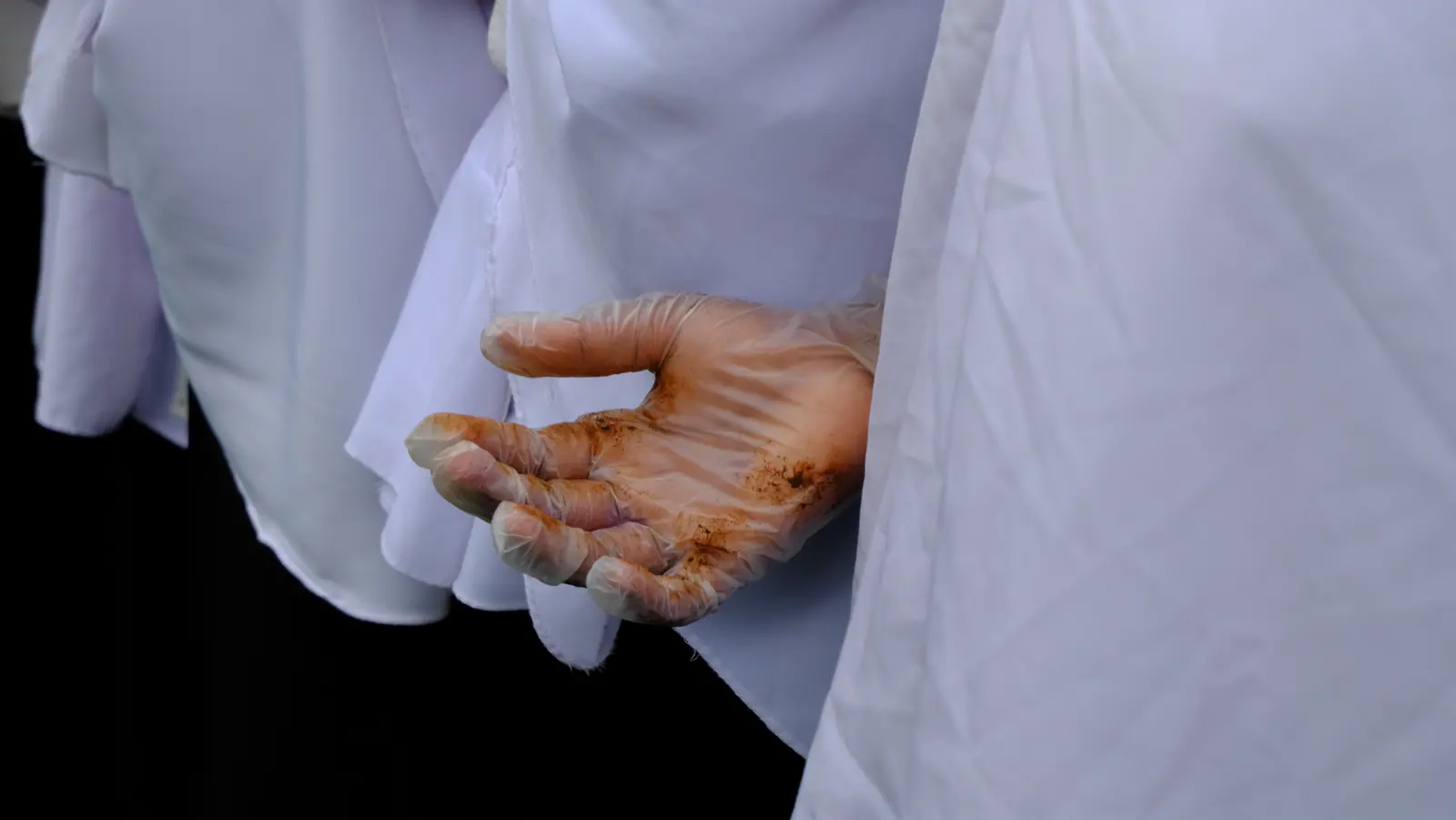
The supplied story focuses on soil-stained gardening gloves as a simple image of participation. Restoration is not presented as something performed for a community, but as work learned through touching, planting and returning to the same ground.
This practical emphasis is central to the PEACE model: ecological knowledge becomes memorable when it is experienced rather than only explained.
03
From forest to wellness
A growing system with social links.
The campus Food Forest includes fruit, spice, medicinal and support plants within one layered landscape. Assalam connects that growing knowledge to the Hamamni social-enterprise story, where local botanicals inform soap and natural-product making.
The relationship illustrates a wider aspiration: healthy soil, useful biodiversity, skills and dignified livelihoods should reinforce one another rather than operate as isolated projects.
Product-level sourcing volumes and the share of Hamamni inputs supplied by the campus Food Forest are not yet published.
Pictures and source record
Authentic Assalam imagery and the supplied annual-report record keep the experience connected to real work.
All 12 experiences, one connected village.
Open the village directory